Call Us: (800) 762-0436

From Concrete to Community
In South Haven, a town of just over 300 in Sumner County, progress rarely arrives with fanfare.
It comes quietly — in early mornings and late evenings, in the steady rhythm of residents showing up, volunteering and returning to do it again the next week. It happens in conversations over coffee and in shared meals where everyone knows one another.
And sometimes, those small efforts build into something bigger than anyone expected.
That’s exactly what happened at the SOUTH HAVEN SENIOR CENTER — where a long-awaited renovation was made possible in part through a $5,000 Sharing Success grant from Wheatland Electric, matched by a $5,000 contribution from Kanokla Telephone Association, based in nearby Caldwell.
Together, those cooperative investments helped bring new life to a space that has long served as the heart of the community, hosting a government-supported Friendship Meal program, regular senior and community activities, and events that bring residents together year-round. The center is also available for rental, providing an important source of funding.
In a town with three churches and a close-knit network of neighbors, the senior center remains one of few shared spaces where anyone can gather. But for decades, the building itself told a different story — one shaped by time, wear and long-overdue change.
“Dungeon is a good word for it,” said Diane Hyde, the senior center’s treasurer, with a chuckle. “The whole building just kind of felt too dark and dingy.”
That feeling stemmed largely from what lay beneath people’s feet. The center had operated for decades on a bare concrete floor — worn down after years of use by multiple occupants.
Still, every week, the doors opened — because in South Haven, what happens inside a place matters more than how it looks.
A BUILDING WITH A PAST
The building itself has lived many lives.
Located on Main Street along U.S. Route 81, the modest metal structure began as a grocery store. Later, it became a boat repair facility, leaving behind scuffs, oil and grease embedded in the floor.
When that chapter ended, the building became a catering business — Bodacious Smoked Meats — known for its meals and monthly all-you-can-eat buffets.
By the time the senior center purchased the building in 2012, the original flooring had long since been removed, leaving only a concrete base that had endured decades of wear. It wasn’t inviting or easy to maintain.
But it endured — just like the people who gathered there.
WHERE COMMUNITY HAPPENS
In a town like South Haven, places like this aren’t just maintained — they’re carried forward.
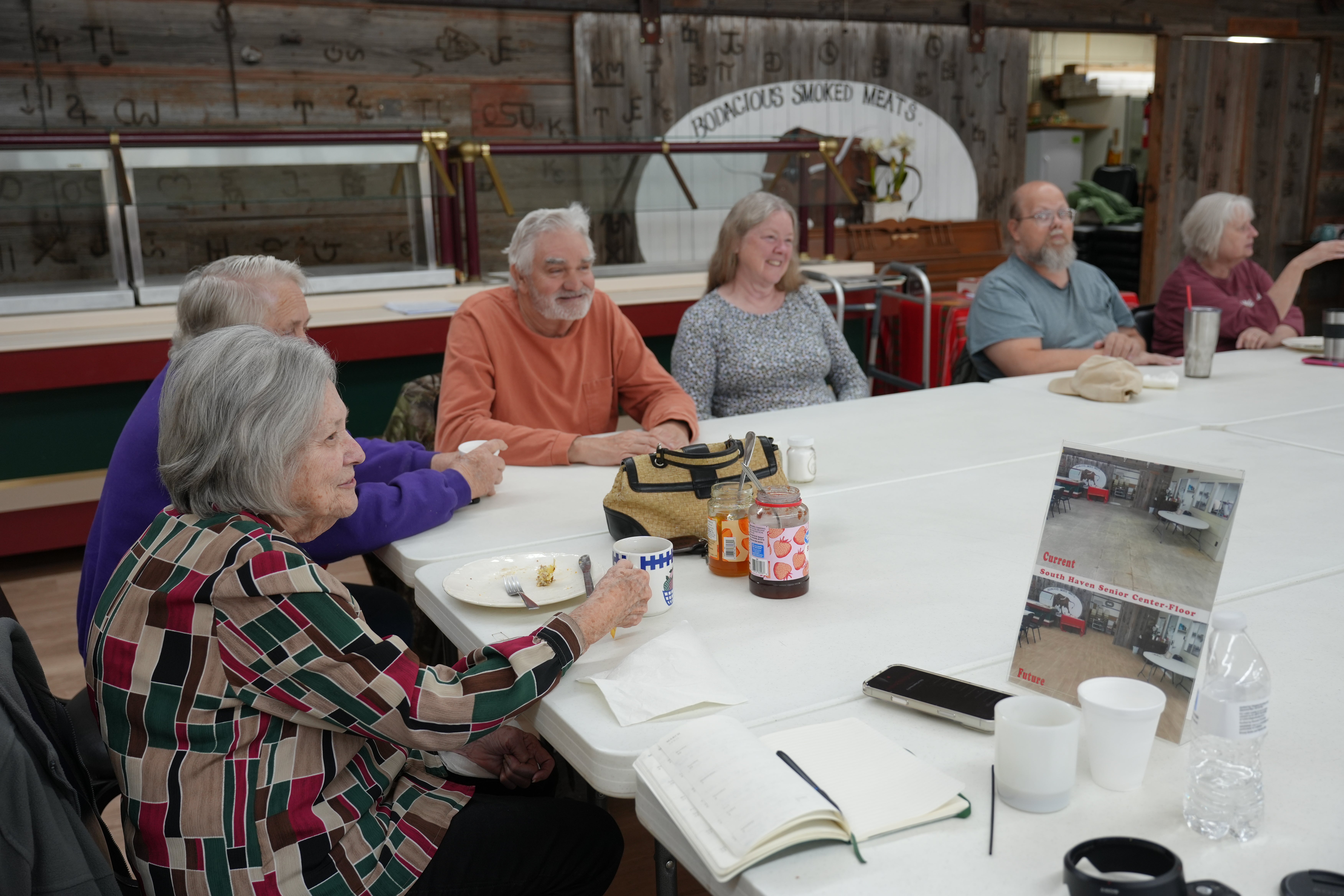
Despite its condition, the center has always been full of life, according to residents gathered one Monday morning in late March for a fundraiser breakfast — a weekly tradition.
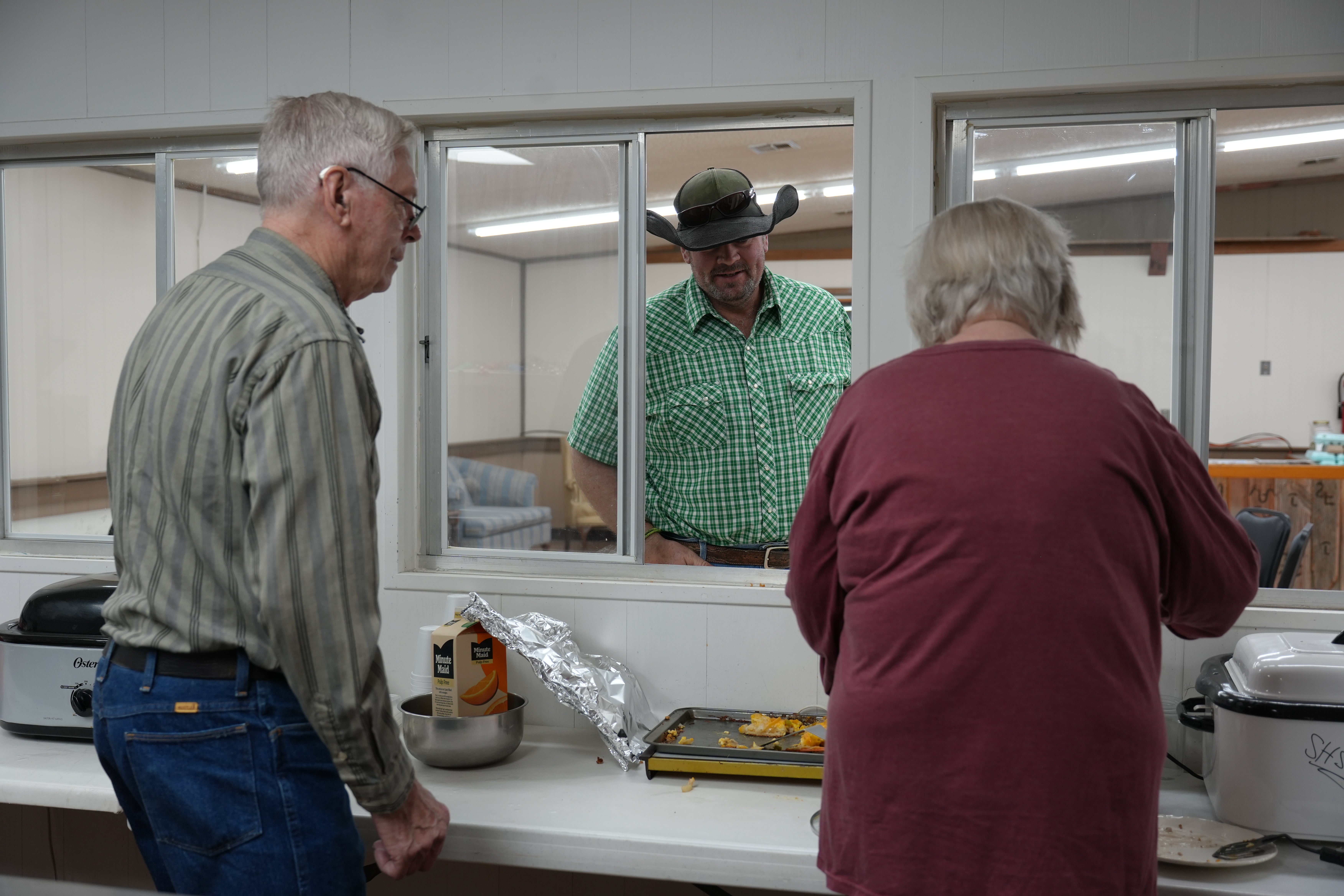
On this particular Monday, volunteers moved between the kitchen and tables to serve guests breakfast pizza, biscuits and gravy, and coffee — in exchange for community donations that help keep the center running, including covering utility costs, Diane said.
These breakfasts, which usually feature biscuits and gravy, egg casserole, and a special for the week, are more than a fundraiser. They’re a tradition that stretches back decades — even generations.
According to locals, the morning breakfasts were started by Dorothy Dvorak, a deeply involved community member known for helping others. Though she passed away in late 2020, her legacy still lives on in the rhythm of Monday mornings.
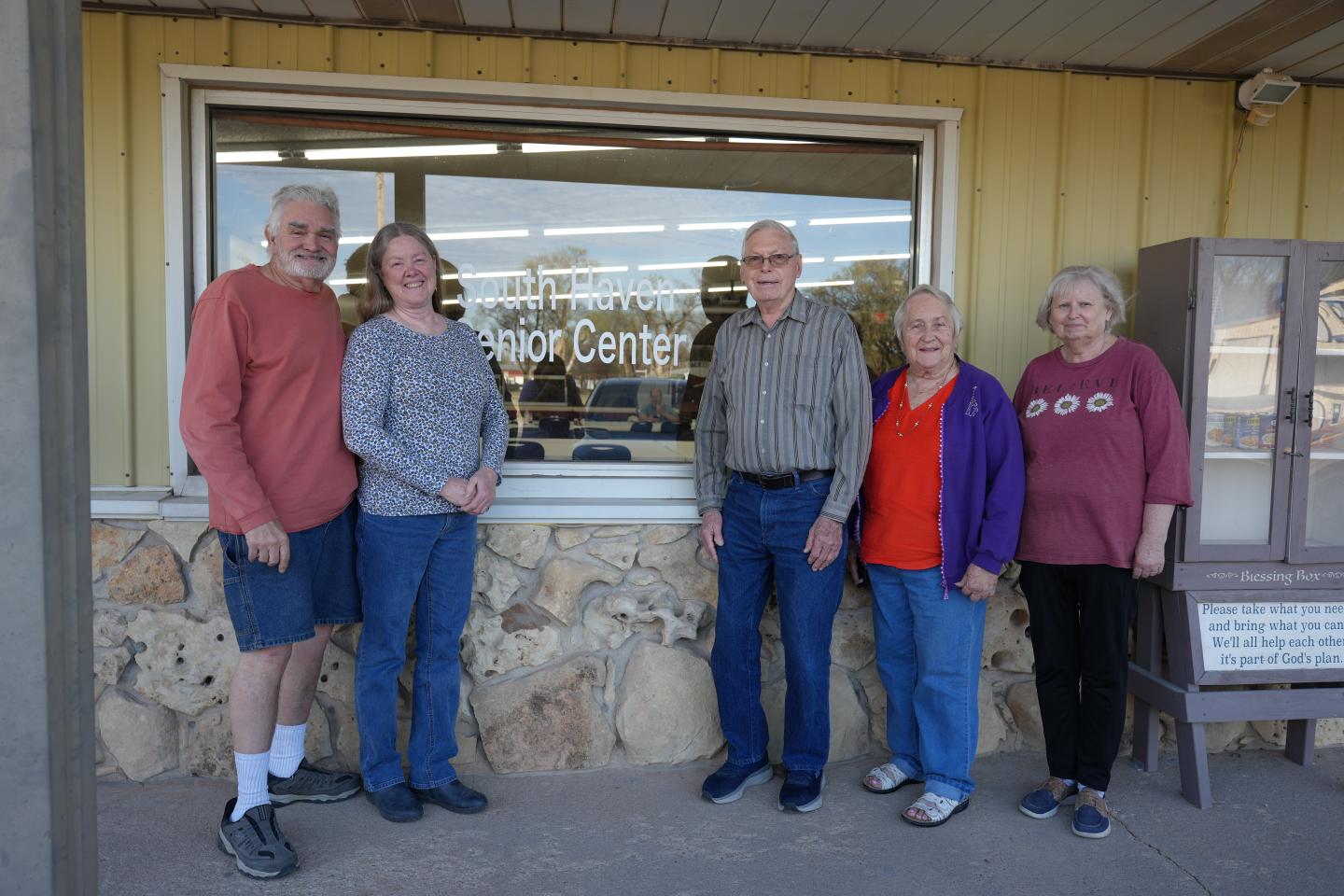
In fact, her grandson, Zachary Dvorak — a local farmer — was there that morning to enjoy the breakfast, voluntarily cooked by Vernon Hromas, the center’s president and go-to handyman, and Janice Harshfield, both secretary and dedicated cook.
“I think she would have thought this was nice … she would have loved it,” Dvorak said, referring to the center’s recent upgrades, including bright new flooring and repainted walls.
Diane smiled at the thought.
“Dorothy always wanted to get this floor redone,” she said. “Hopefully she’s up there looking down at us, saying, ‘About darn time.’”
IMAGINING SOMETHING MORE
The push for change began with a simple idea, something “a little lighter, a little brighter,” Diane said. She, along with Harshfield and Sherry Carothers, also a board member, brainstormed their options, envisioning something beyond aesthetics.
That vision took shape through the efforts of board members, volunteers, and community supporters — including memorial contributions.
The goal wasn’t just to improve the building — it was to make it feel like it belonged to everyone.
THE WORK BEHIND THE SCENES
But before anything new could be added, there was work to undo.
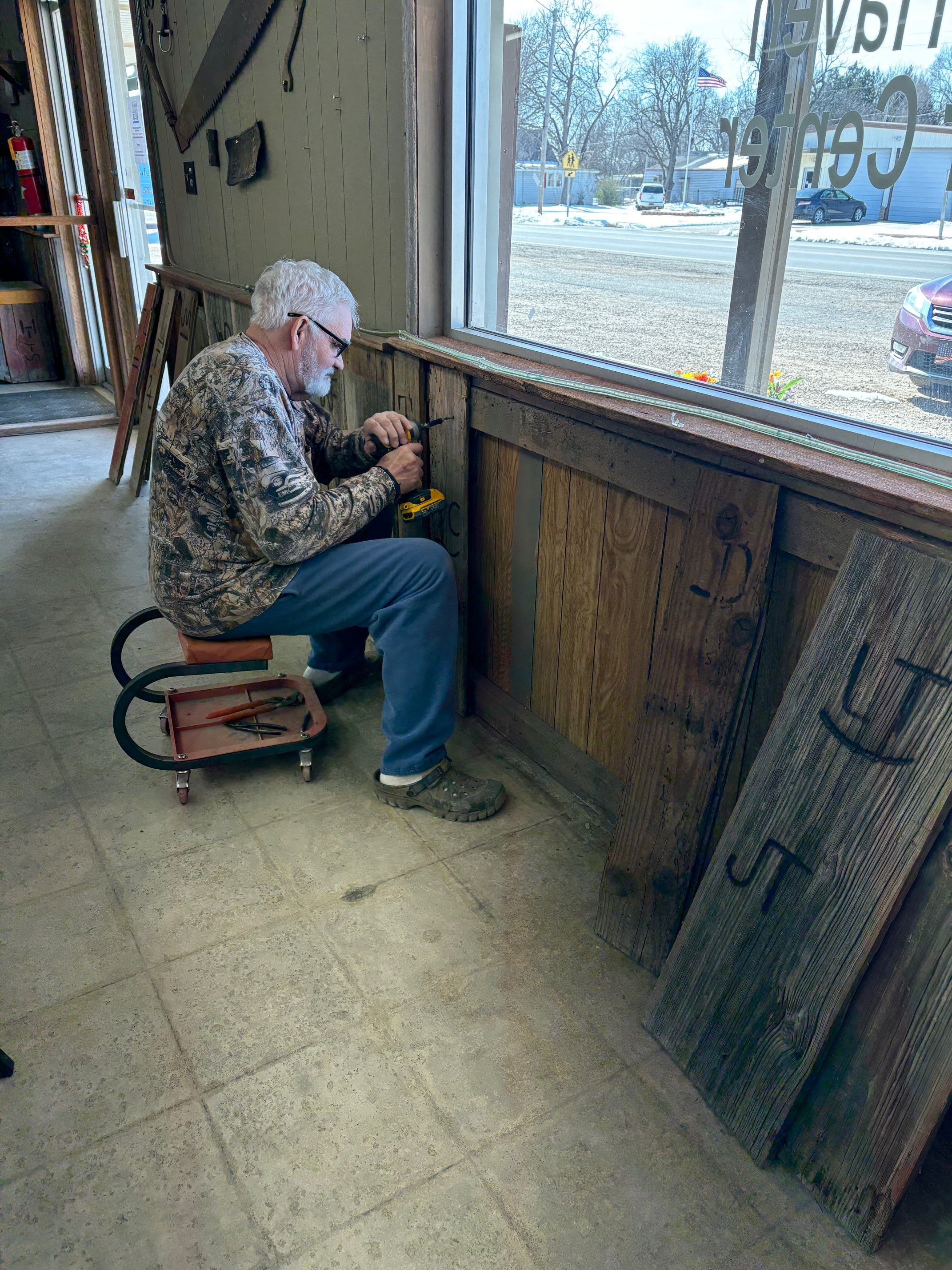
Diane and her husband, Russell, who is the vice president of the senior center, removed the building’s old wainscoting, made from barnwood marked with local livestock brands. Years of termite damage made removal necessary, though thankfully, no active termites were found.
The couple patched walls, prepared surfaces, and repainted the interior — covering dark colors with lighter tones that reflect natural light. The couple said at least three coats of new paint were required.
“At least she taped everything up … that’s the worst part of painting,” Russell said, with a grin.
Not everything was replaced. A section of the original barnwood was left on the east wall, preserving the brands of local farmers and ranchers — a quiet tribute to the building’s history and the community’s roots.
THE CHALLENGE BENEATH THEIR FEET
The most significant hurdle, however, remained the floor.
Estimates to replace it ranged from $17,000 to $18,000 — no small sum for a town of this size.
“To raise that kind of money is pretty difficult,” Diane said.
The center turned to fundraisers and community donations. Progress was steady — but slow.
For a time, completing the project in phases seemed like the only realistic option, Hyde said. Then came the turning point.
Wheatland Electric awarded its $5,000 SHARING SUCCESS grant to the project, and soon after, Kanokla Telephone Association, based in nearby Caldwell, matched that contribution with another $5,000.
Together, those cooperative investments, along with an additional contribution from the Sumner County Board on Aging, provided more than half of the funding needed — transforming what once seemed like a long-term effort into a project that could be completed all at once.
“We believe in the power of connection — both through technology and through places like our senior centers that bring people together face-to-face, and this project reflects the very best of the cooperative spirit,” said Jill Kueny, CEO of Kanokla. “Supporting the South Haven Senior Center is about more than a building improvement; it’s about investing in the social fabric of rural communities.”
A NEW CHAPTER
Today, the difference is immediate. With new flooring and fresh paint, the space feels brighter, warmer and more welcoming.
Even so, challenges remain, including the need to upgrade the bathrooms to be Americans with Disabilities Act compliant and to replace a broken water softener. But even with those hurdles, the sense of renewal is clear.
Diane said the center plans to host an open house later this year, inviting both local residents and neighboring communities to experience the transformation.
In a larger town, this might simply be called a renovation.
But in South Haven, it feels like something more lasting, a reflection of people who care enough to keep showing up and a reminder that when communities — and cooperatives — work together, even the biggest challenges can be met.
What was once a concrete floor is now something more: a foundation for connection, for tradition, and for whatever comes next.
“I would love for it to be a center where people just love to gather and hang out and meet with friends,” Diane said. “Not just for seniors, but for the whole community.”
And in a town like South Haven, that’s exactly what makes a place matter.
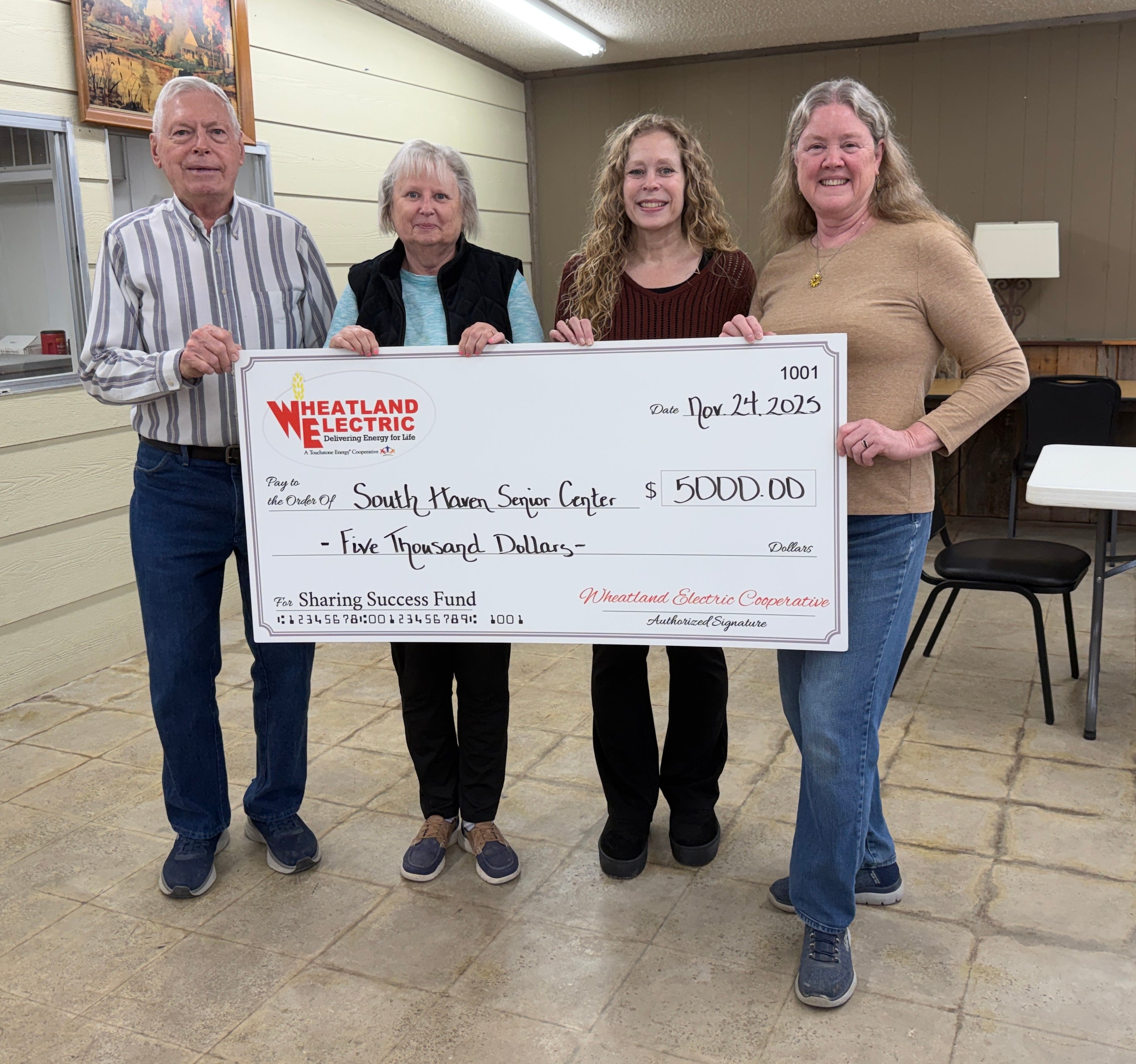
then matched by Kanokla, a telecommunications service provider in Caldwell. Pictured from left: Vernon Hromas, Janice Harshfield, Mary Hoisington, member services and key accounts manager at WEC, and Diane Hyde. Hromas, Harshfield and Hyde serve on the senior center board.