Call Us: (800) 762-0436

46 Years on the Line
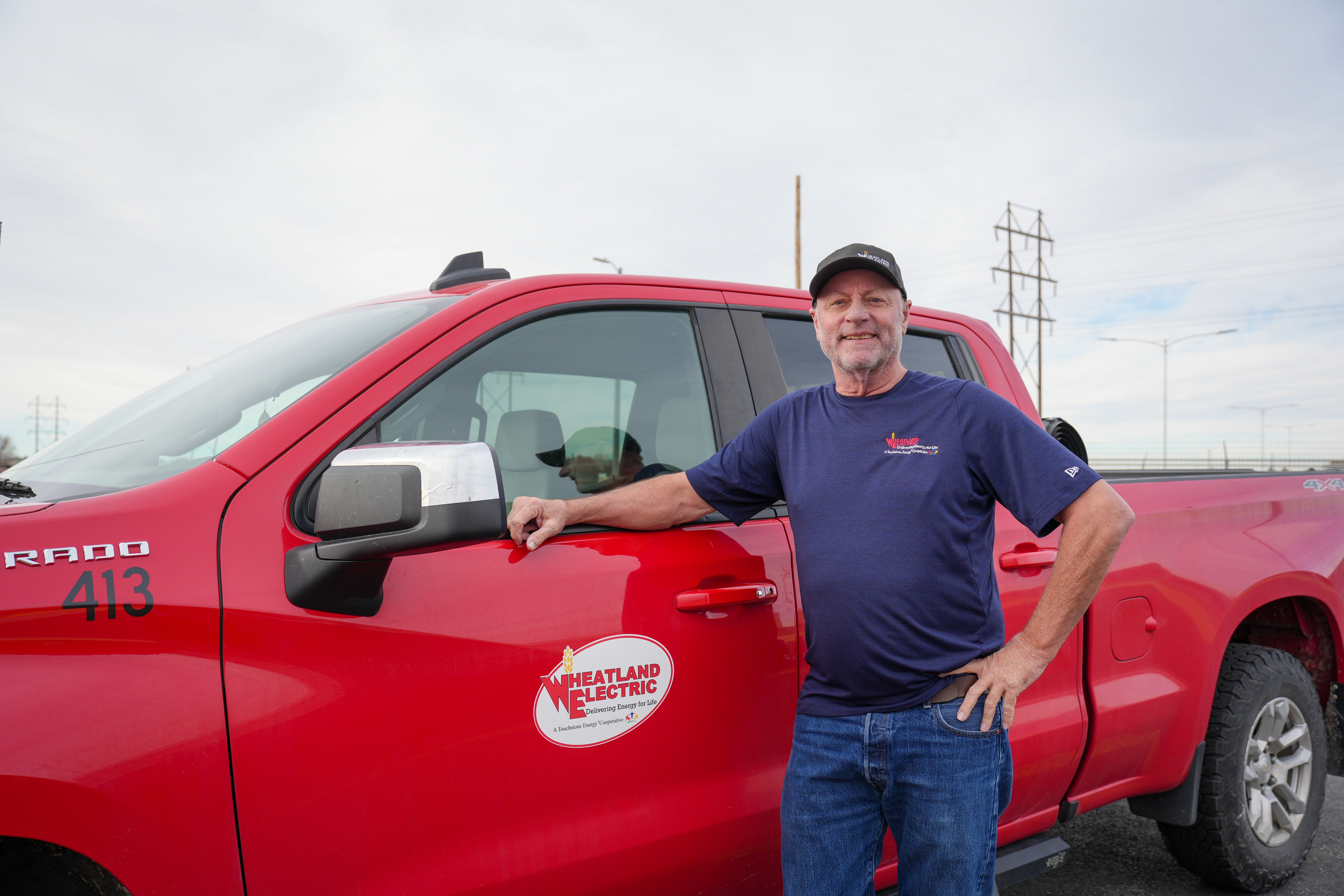
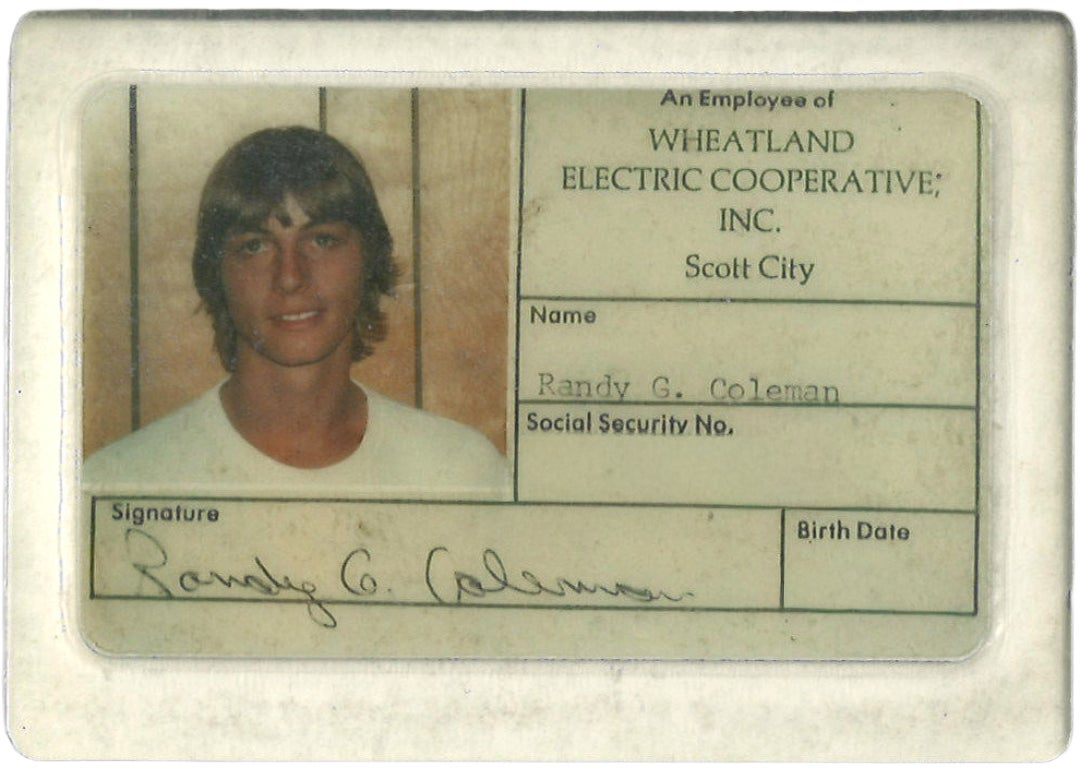
When RANDY COLEMAN walked into a Wheatland Electric Cooperative, Inc. (WEC) warehouse on Feb. 1, 1980, fresh out of high school, he wasn’t thinking about a career — let alone one that would span almost half a century.
He was a Syracuse kid looking for a steady paycheck and a sense of direction. What he found instead was a profession, a second family, and a front-row seat to over four and a half decades of change in the electric cooperative world.
“I really didn’t know what I was going to do out of high school,” he admitted. “But once I started working around the guys in the shop, they all had a real camaraderie and got along great. I wanted to be part of that.”
That desire — to belong, to work hard, and to do something meaningful — quietly shaped the next 46 years of his professional life.
FROM THE WAREHOUSE TO THE LINE CREW
On Feb. 2, 2026, Coleman’s professional journey will come full circle, as he retires almost 46 years to the day after his journey first began.
His career began humbly. Hired as a warehouseman in Syracuse, he spent his early days insulating buildings and tackling whatever odd jobs needed doing. His entry into the cooperative came through a familiar smalltown connection: his aunt, Barbara Coleman, who worked as a consumer service representative at the time.
“Back then, we didn’t have a nepotism policy,” he said and laughed.
After about a year, warehouse work slowed. What could have been the end instead became a turning point. When Coleman was offered a spot on the line crew, he didn’t hesitate. “That’s where I wanted to be anyhow — that’s where the money was,” he said, warmheartedly.
But what he didn’t have was experience, training, or even a basic understanding of electricity.
“I knew absolutely nothing,” he said. “But I knew it would be a good job.”
LEARNING THE TRADE THE HARD WAY
Coleman entered the lineman apprenticeship program on Feb. 1, 1981, exactly a year after he was hired, at a time when the job looked very different than it does today. At the time, there were no bucket trucks stationed in Syracuse — only digger derricks and a single bucket truck based in Finney County, he recalled.
“We climbed a lot more poles back then,” Coleman said. “The work was more physical. We didn’t have battery-powered tools — just crescent wrenches and elbow grease.”
The apprenticeship, which lasted three years, was demanding, especially the math: voltage drop calculations, a little bit of trigonometry, series and parallel circuits. Math wasn’t Coleman’s strongest subject, but strong mentors made the difference. He credits instructors like his former line superintendents, Norman Williams, and Roy Largent, for guiding him through.
In 1984, Coleman completed the program and became a journeyman lineman — a milestone that brought more responsibility, more trust, and a welcome raise.
“It meant everything,” he said. “You could go on call. You could do all the hot work. You were finally doing what you trained for.”
Despite the risks, fear wasn’t something he dwelled on.
“You trusted your training. If they thought I was ready, I figured I probably was,” he said, jokingly.
STORMS, ICE AND UNFORGETTABLE DAYS
Over the years, Coleman worked through countless outages and storms, but a few moments stand out — especially an extreme blizzard in the mid-1980s.
“The highways were closed. You couldn’t see 20 feet in front of you,” he recalled. “We were working double-circuit poles in Garden City, and the wind just howled all day. Everybody’s face was iced over.”
Then, just as the crew prepared to energize the line, something remarkable happened.
“The wind just stopped,” Coleman said. “The sun came out right at sundown. We energized the line — but that was probably the coldest I’ve ever been in my life.”
Later storms, including crippling ice at the turn of the calendar year from 2006 to 2007 and Winter Storm Ursa in 2017, brought their own challenges, though by then Coleman was working as an area-wide supervisor, behind the desk.
“(Those experiences) weren’t as bad for me, but they were really bad for the guys,” he added, referring to lineworkers.
But those experiences didn’t push him away from the work. Instead, they deepened his respect for the people doing it.
FROM THE LINE TO LEADERSHIP
Coleman was promoted to area wide supervisor in 1997. It wasn’t a move he’d been chasing, but he knew the opportunity might not come again. Still, the transition was difficult.
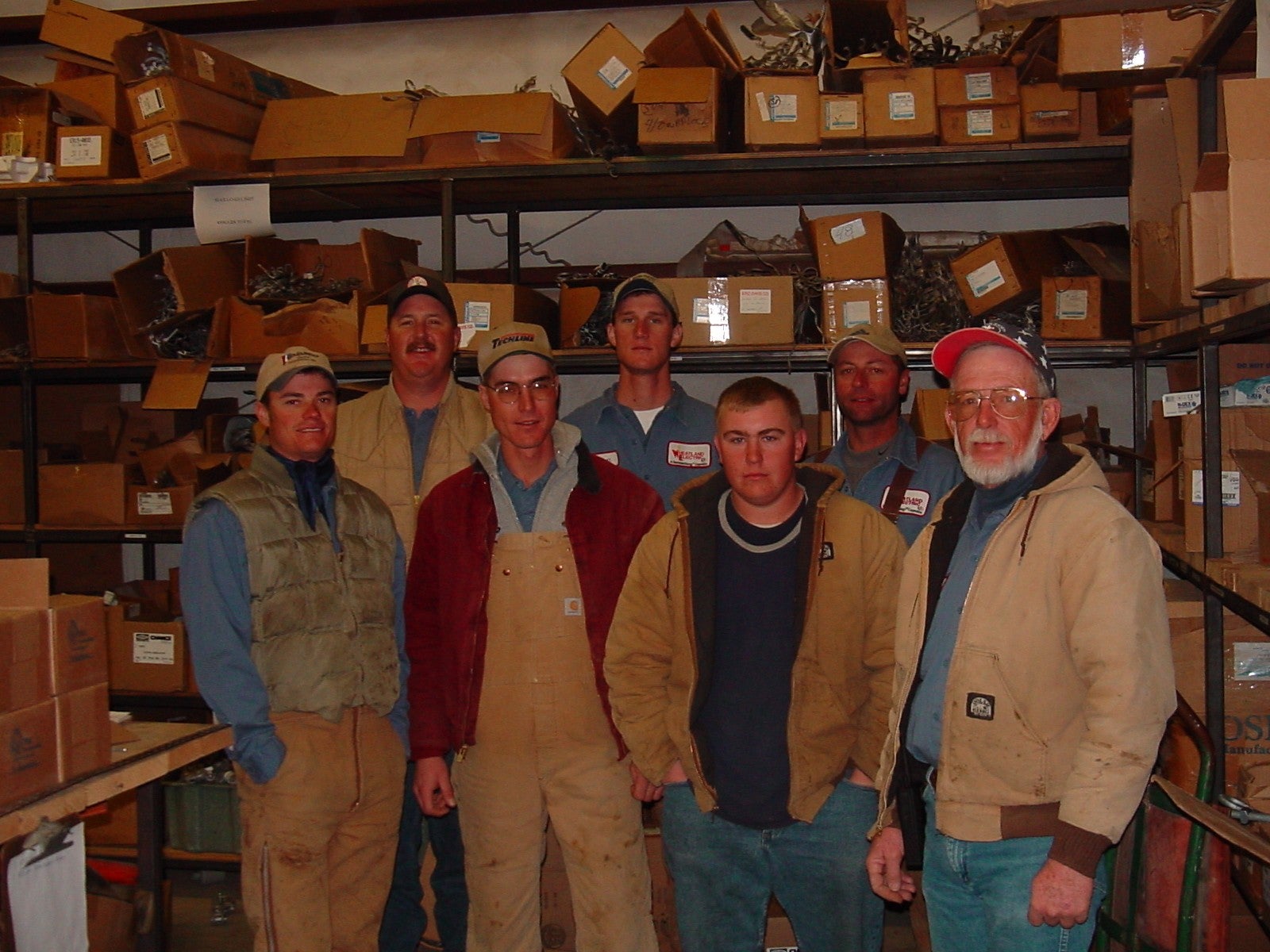
“Being on the line crew was the happiest I ever was,” he said. “The camaraderie and doing stuff after work together — it’s hard to replace.”
What helped was credibility. Over the decades, Coleman had done the work himself, and the lineworkers across the districts he supervised knew it.
“They knew that I knew,” he said. “That made it easier for us to work together.”
As a leader, he emphasized common sense and compassion — especially during harsh working conditions.
“I’ve always told them, ‘You’ve got to be smart enough to get in the truck and warm up once in a while,’” he said.
Longtime colleague Curtis Peterson, WEC manager of operations, said Coleman’s leadership was built on collaboration and trust formed over decades of working together. The two met in the early 1990s and worked closely across field and leadership roles, relying on one another for perspective and problem-solving.
“It’s always been good to have somebody you can call — a lifeline — to bounce ideas off of,” Peterson said. “We’ve been colleagues and friends for nearly 30 years, and I’m definitely going to miss him.”
A COOPERATIVE, A FAMILY
In 2018, Coleman was promoted to district manager, overseeing multiple counties across WEC’s service territory, including Scott, Greeley, Wichita and Hamilton. In that role, his philosophy remained simple: service comes first.
“Members are always right, no matter what,” he said. “They’re good people, and I helped make sure Wheatland has always taken good care of them.”
Coleman said what sets a cooperative apart is its member-driven mission.
"We’re not here for profit — we’re here for our members,” he added.
That model — and the culture it creates — has also defined his career and the relationships he’s built with colleagues over the decades.
“It’s been a really great place to work — they’ve been like my family for over 40 years,” he added.
LEGACY, LESSONS AND WHAT COMES NEXT
When asked what he’s most proud of, Coleman doesn’t point to projects or titles. He talks about people. He recalls a tough foreman early in his career, who taught him work ethic and safety the hard way — and how those lessons stayed with him.
“When I first started — Jerry Valentine — he was very hard to work for, very particular, and not a joy, trust me,” Coleman recalled. “But he taught me work ethic, safety and many many things, which I appreciate. I like to think I’ve passed some of that on to the younger guys.”
For the last eight years, he’s helped train apprentices at WEC, emphasizing responsibility and safety above all else.
“Always wear your rubber gloves. Follow your five safety rules,” he said. “Everybody I’ve seen get hurt didn’t do one of those things.”
As retirement approaches, Coleman looks forward to spending more time with family and grandkids, and traveling — something that was difficult while being on call around the clock. Still, leaving won’t be easy.
“It’s been a great career,” he said quietly. “I’ve got a lot of very, very good friends here.”
In an industry defined by infrastructure and equipment, Coleman’s career reminds us that it is people — working together, looking out for one another — who truly keep the lights on. While the power lines he helped build will continue to deliver electricity, the work ethic, leadership and care he passed on to others will endure just as long.